
Final Report from Scotland by Miss Rowena /

I know, dear ones, that you are most anxious for this report from the food scene in Scotland and London. Yet, I must begin with a wee apology. I was stressed when I wrote last and did not fully appreciate my current circumstances. Now, there still is no evidence that the food will improve overall, but the lodging is quite comfortable and I learned that my current locale is Tennessee, not the abomination of a word I elucidated from the pronunciation. Not that I might be blamed, as some of the ways these colonists use or pronounce words are unfathomable. Yet we persist.
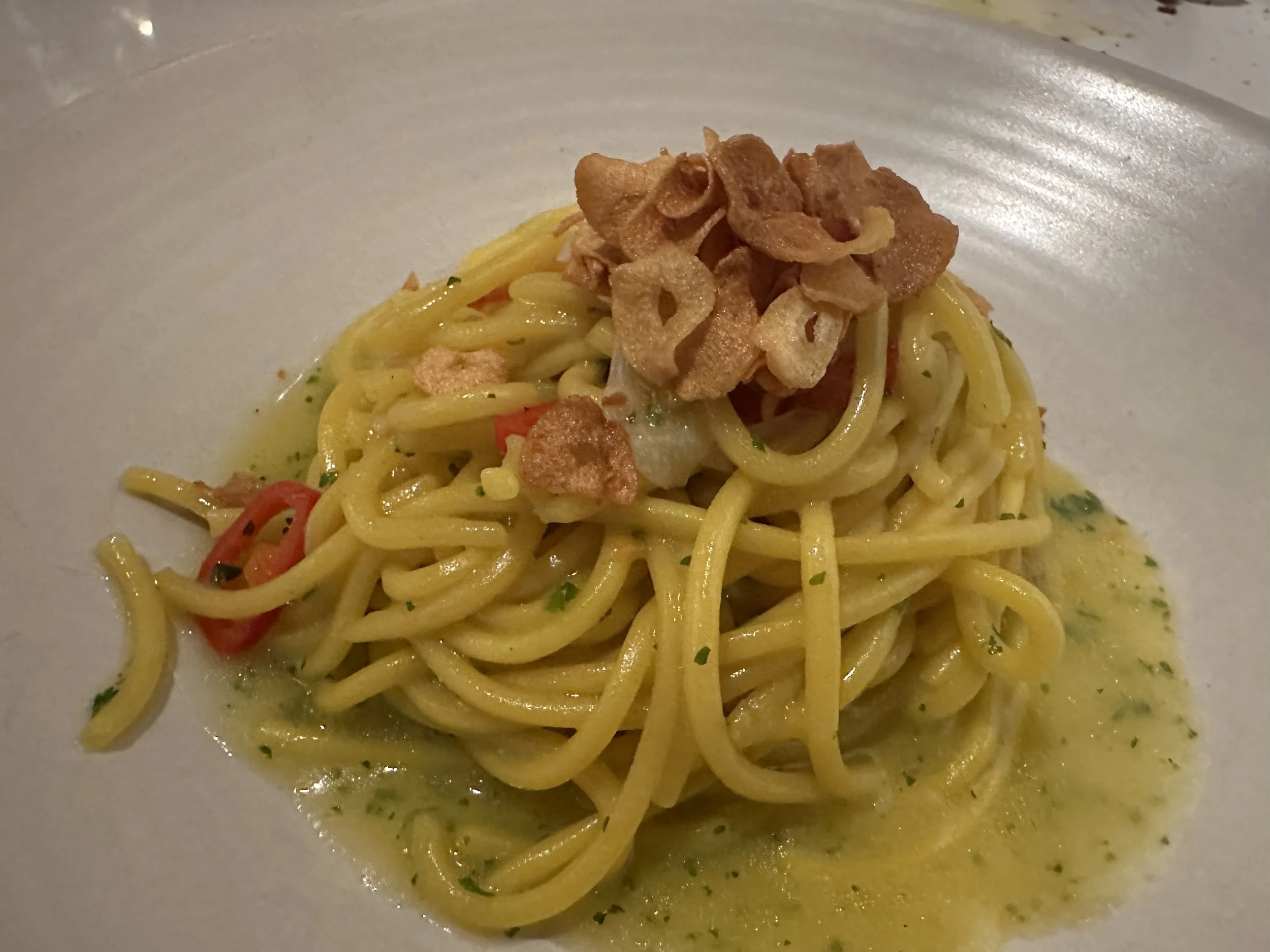
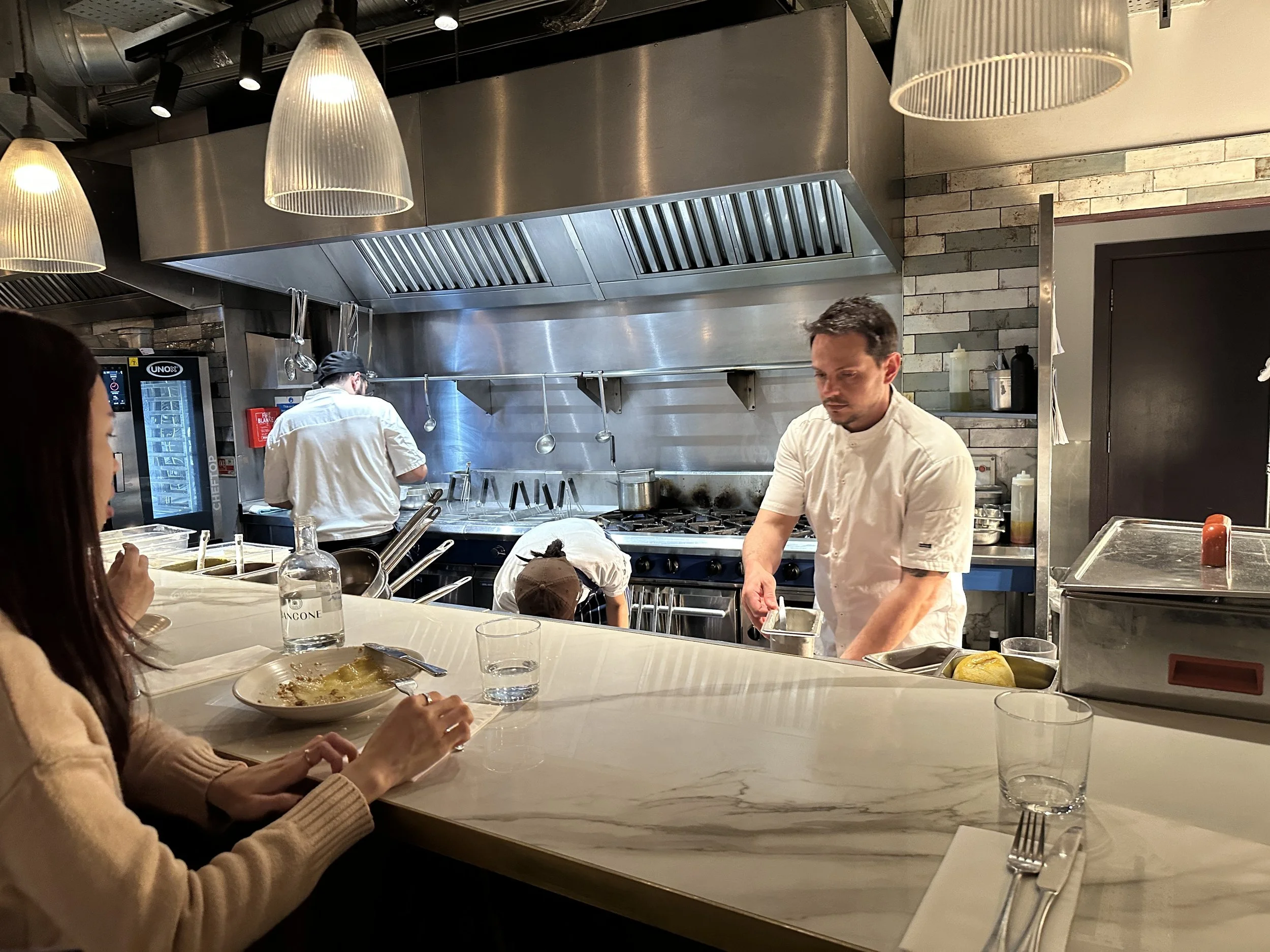
The lad and lass ended their holiday by swooping off to London on the express train. Lovely ride. We then Ubered to our hotel. There they made a superior choice. We were at the Strand Palace in the midst of London proper. Of course we walked everywhere. I guess they never heard of the famous English taxi! Two very notable meals ensued. One at the trendy Bancone (https://www.bancone.co.uk/) nestled into the West End’s theatre district a few wing flaps off Trafalgar Square. It was, as expected, quite busy, and I feared we would be directed to a stool along the bar, but at the last moment we veered into a great table. Crisis averted. Eating a good meal without a proper chair is - well, you might as well be sitting in a caravan eating in one of those contortionist-required folding chairs. Or, dare I say, in the automobile. Shudder. Back to the food. It was a rather simple menu. Freshly made pastas predominated, yet with exquisite sauces and accompaniments. The lass ordered bucatini cacio e peppe (long, tubular pasta with pecorino Romano cheese sauce and pepper – the best macaroni and cheese she ever ate, she said). The lad had spicy chili and garlic spaghetti. A mite more adventurous than I expected him to order. It was magnifico.
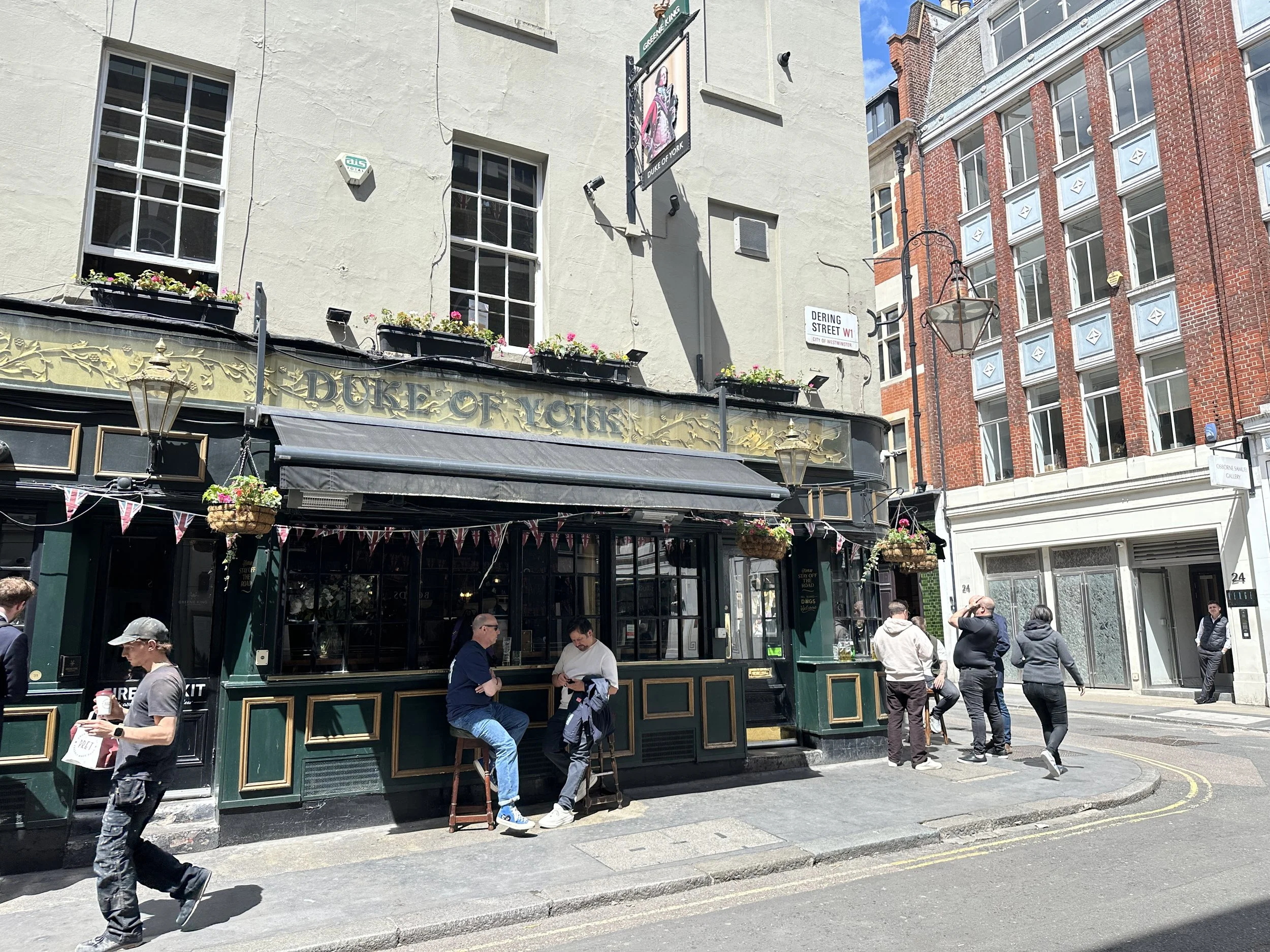
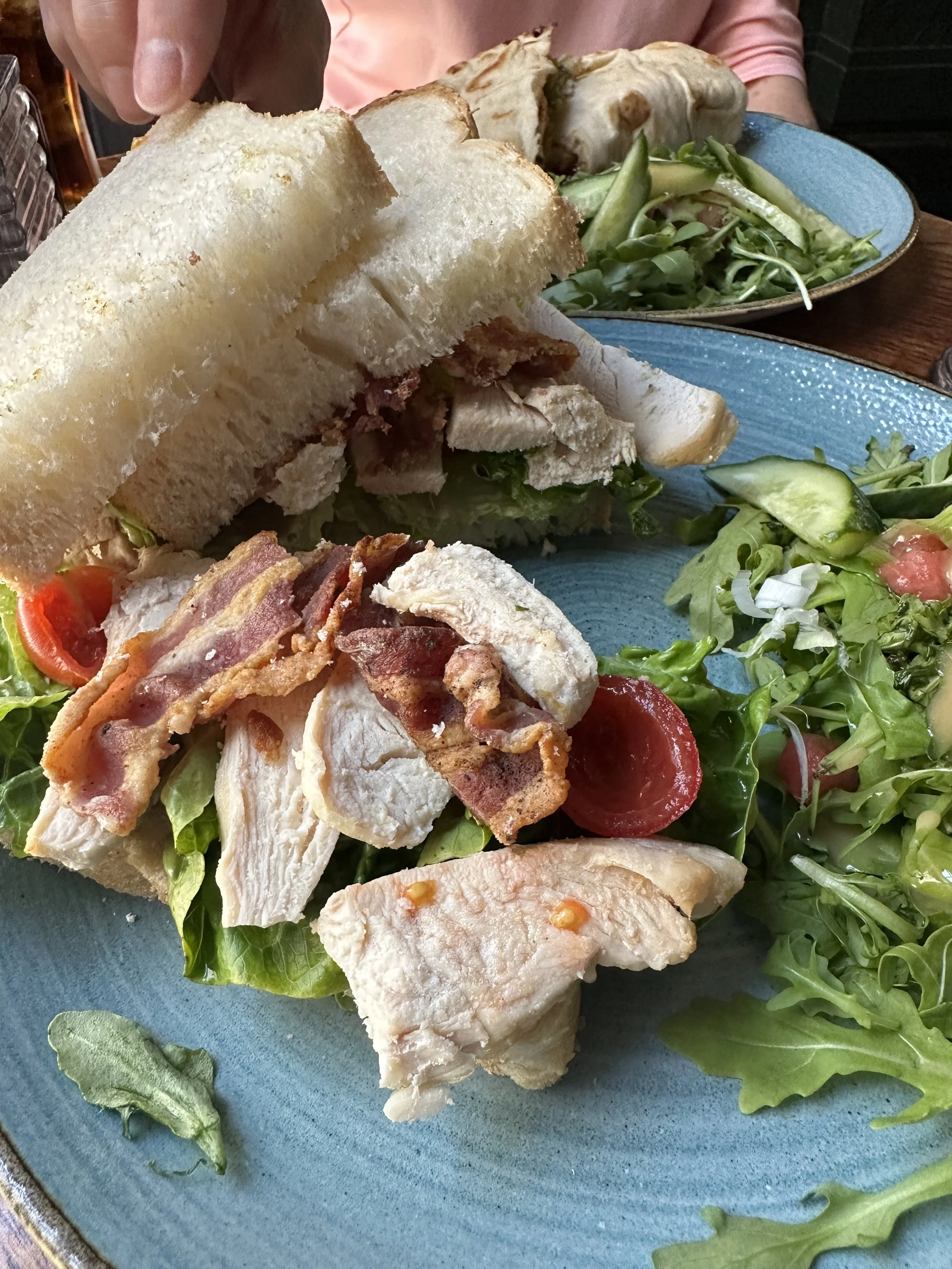
I'm chuffed to bits they finally opted for a traditional British pub, The Duke of York. Why they waited this long and why they missed innumerable Scottish pubs while choosing instead to eat a cracker for lunch is a mystery fit for Dame Agatha. The Duke of York turned out to be a fine choice. It had a wrought-iron spiral staircase for access to two additional floors, and we ascended to the top one and settled into a nice window table and waited for our order to arrive. The hard-working young lady who took the order also arrived up the stairs to open a hatch to the dumbwaiter and then delivered the nice meal to our table. The lad - I could have ordered his food with a 10-second perusal of the menu, had a grilled chicken sandwich on sourdough. I ask you – in a British pub and you order a chicken sandwich? It was, however, grilled to perfection. The lass, as usual, was thoughtful and her choice delightful: a grilled halloumi (an un-ripened, brined cheese) with chili jam, marinated red bell pepper, and arugula, on flatbread. Never mind that she had no idea what halloumi was before she ordered it. She is adventurous!
The highlight of the food experience in London was neither of the restaurants, fine choices both, but the enticing and swoon-worthy Fortnum and Mason. All six floors were explored for almost two hours. The pastry, the teas, the sweets, the delicate china, and a whole area devoted to filling your picnic basket. Oh my, tha mi toilichte. Absolute bliss. I ought to have found a niche and burrowed in and then “missed” the flight to the US, but, true to my word, I am now in the Good Ol’ USA.
So, I shall see you in a fortnight and unfold the first of the Cuisine and Culture reports from America or Tennessee, not sure yet. And, please, don’t expect too much culture (or food).
Respectively Submitted,
Miss Rowena Brambleglen

Ruins .4 /
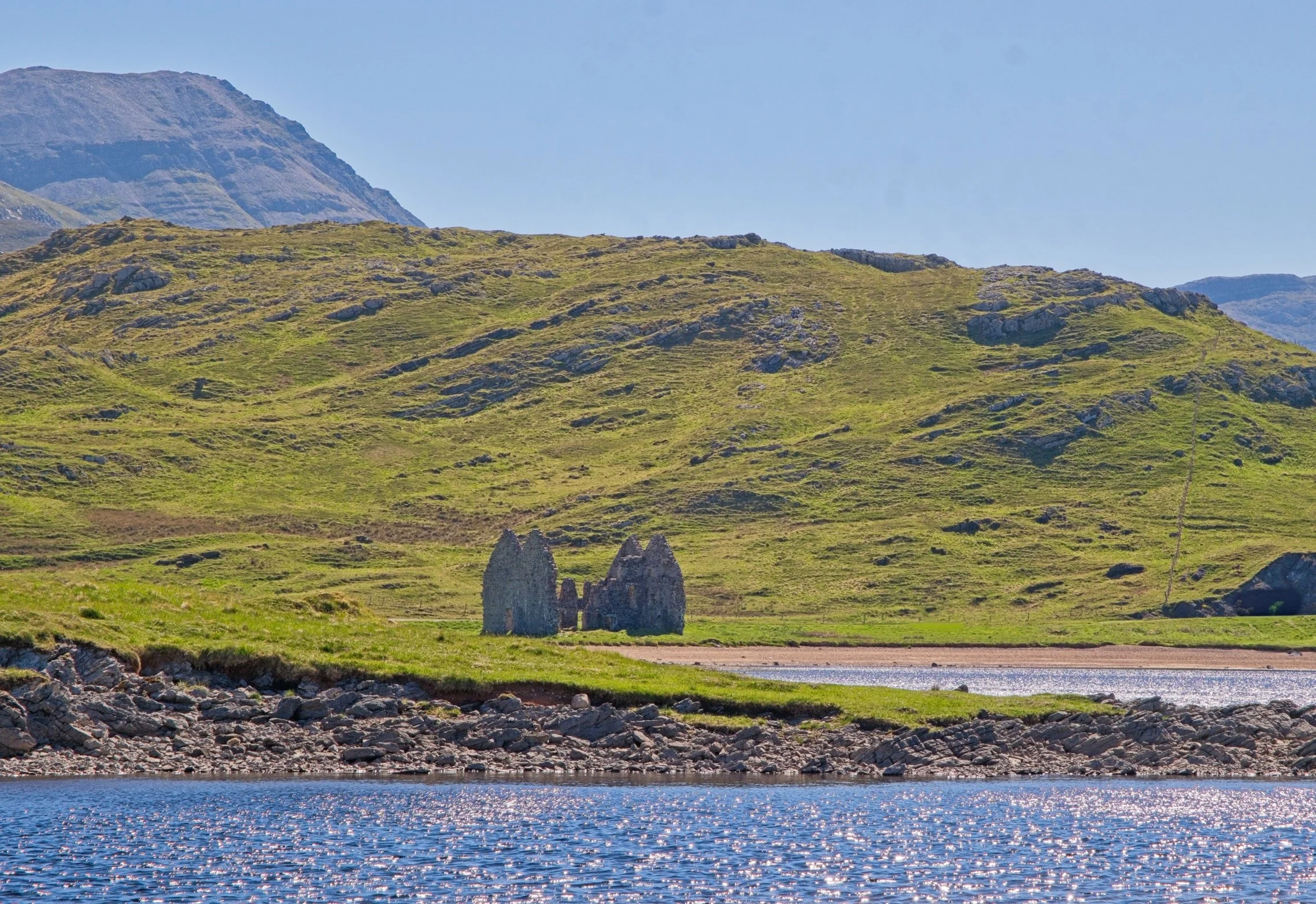
This is Calda House. It was a two story manor house built in 1660 by the owners of yesterday’s post, the Ardverck Castle. Here is some history: The lands were a property of the MacLeods of Assynt, but passed to the Mackenzies, and they built the house about 1660. The family were said to have held riotous parties, and soon became short of money. The house was plundered and torched in 1737, perhaps deliberately by the Mackenzies as they were in debt. The Mackenzies lands were forfeited after the Jacobite Rising, and the house was sold to the Earl of Sutherland in 1758. The house is said to have been burnt out again, this time by the MacRaes in 1760, and it was never restored.
Ruins .3 /
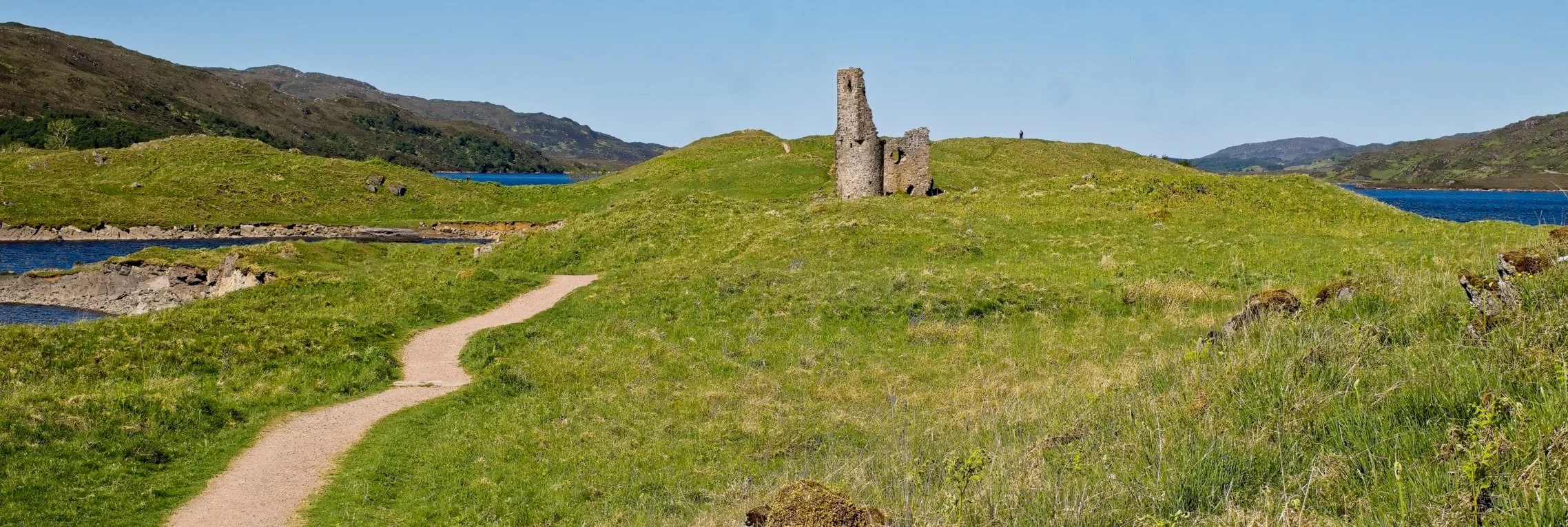
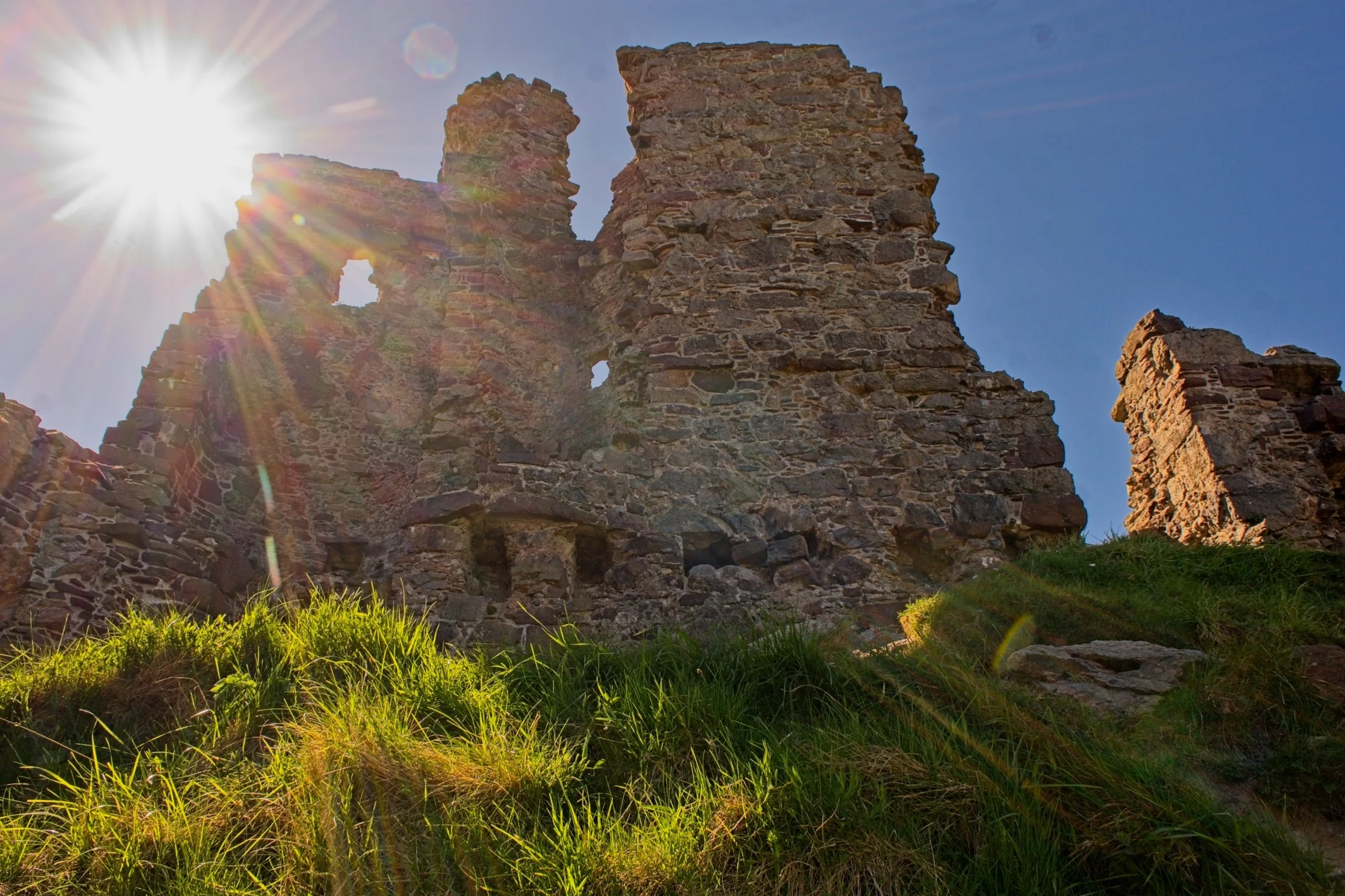
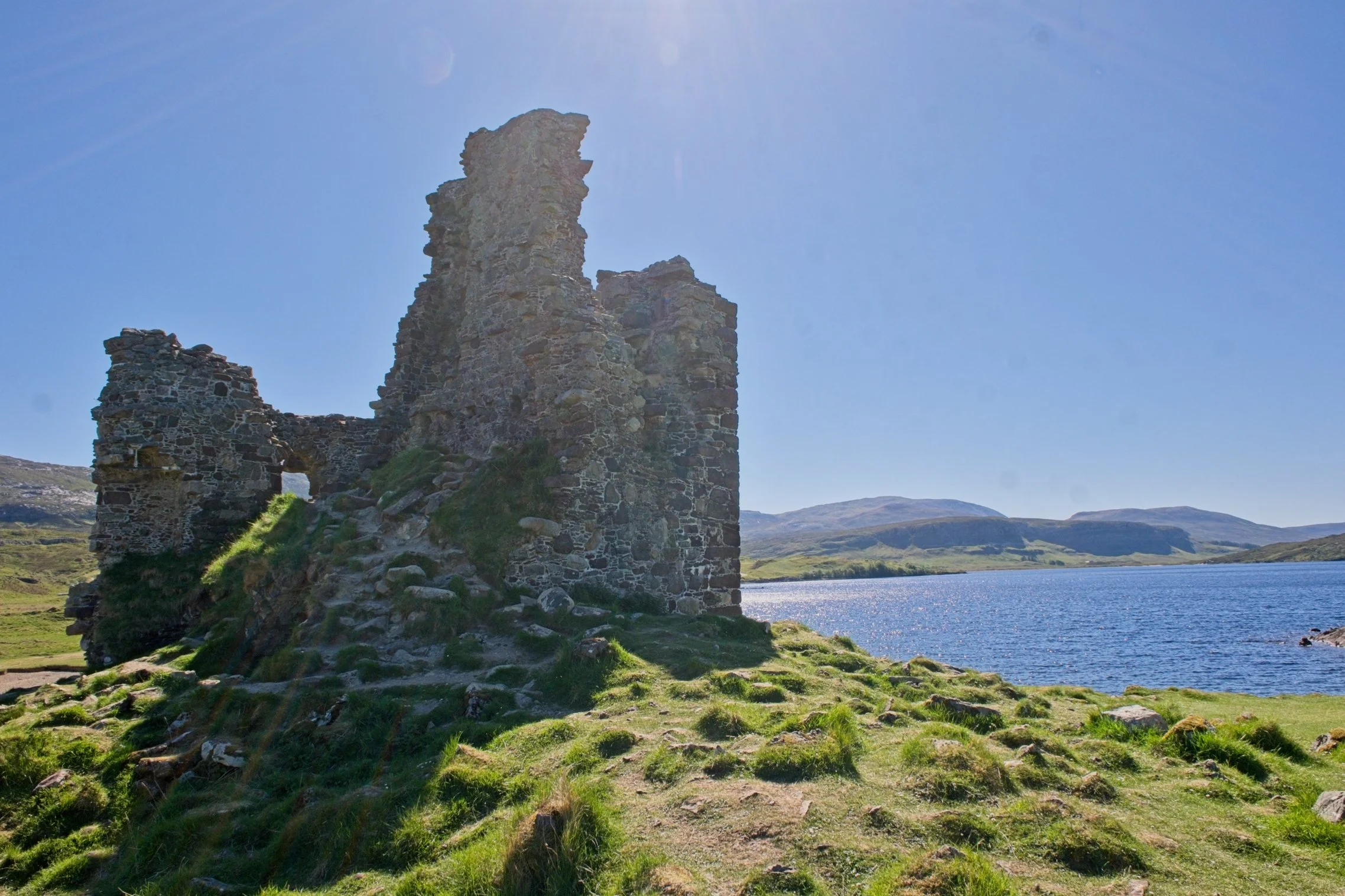
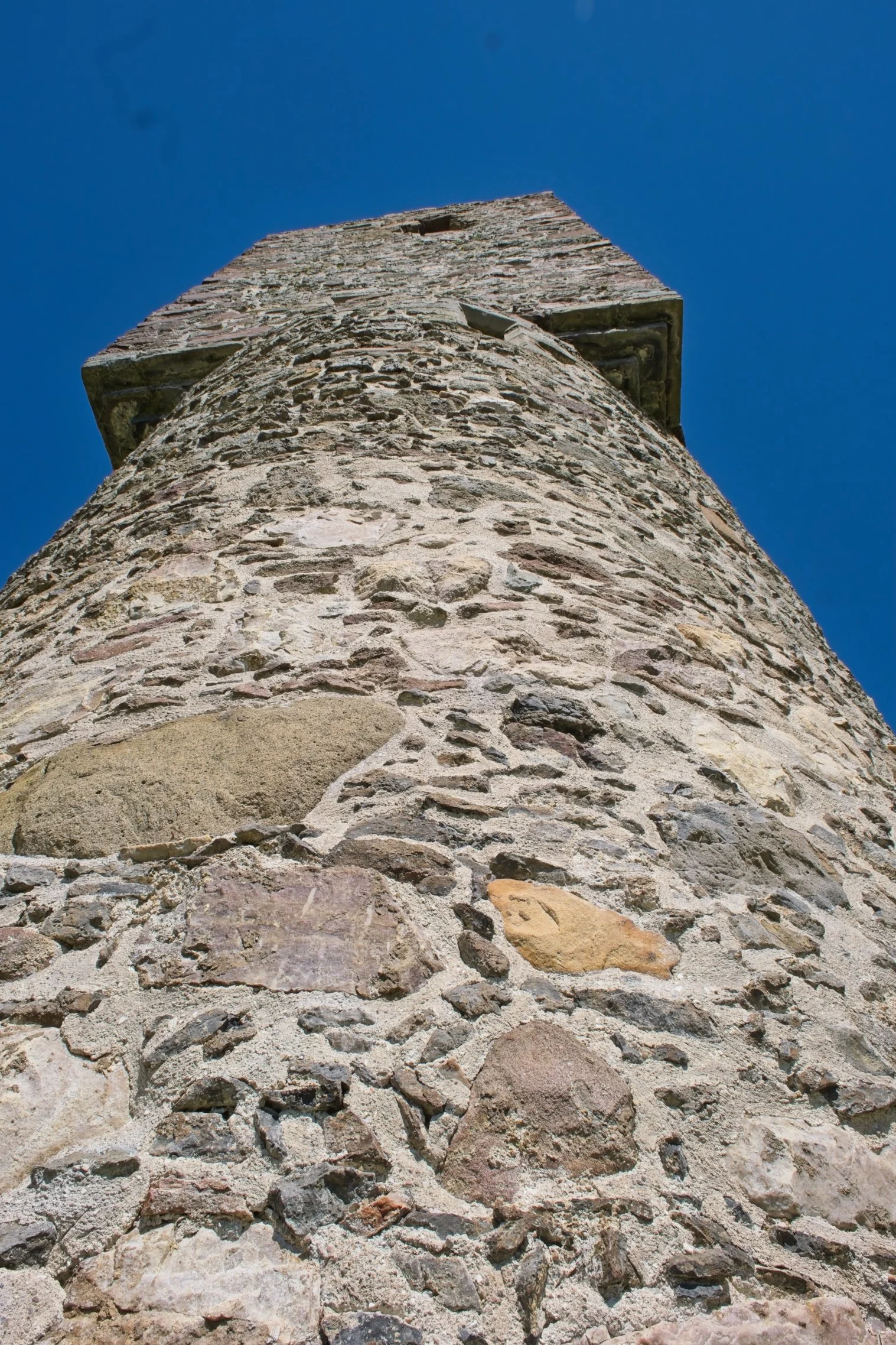
One of my favorite spots in Scotland included the remains of this castle, Ardvreck, built the year Columbus sailed the Atlantic. It was attacked and sacked in 1672 and damaged, and destroyed in yet another attack in the early 1700’s. Ardvreck is a small castle, as we usually imagine, with about 1/3 of the footprint still standing yet typical for the time and place. It is a spare and isolated spot where two lochs meet. The castle besides the beauty of the place is interesting because it is a completed chapter of life, no rebuilding, no park, or even much of a tourist stop. The setting was stunning. It is said to be haunted by a man in grey. Note the first photo and that fact I never saw him again. Hmmmm.
Ruins .2 /
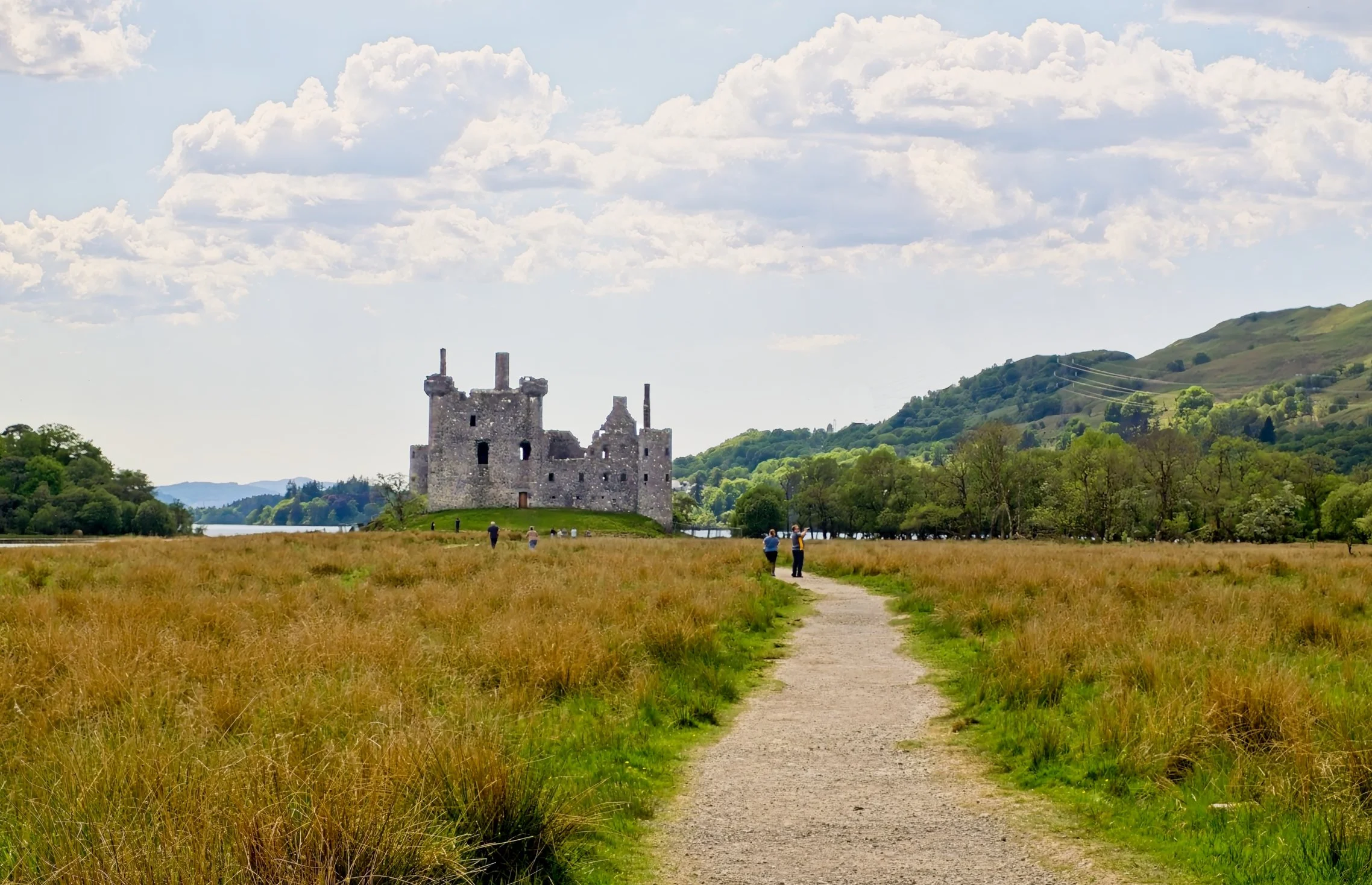
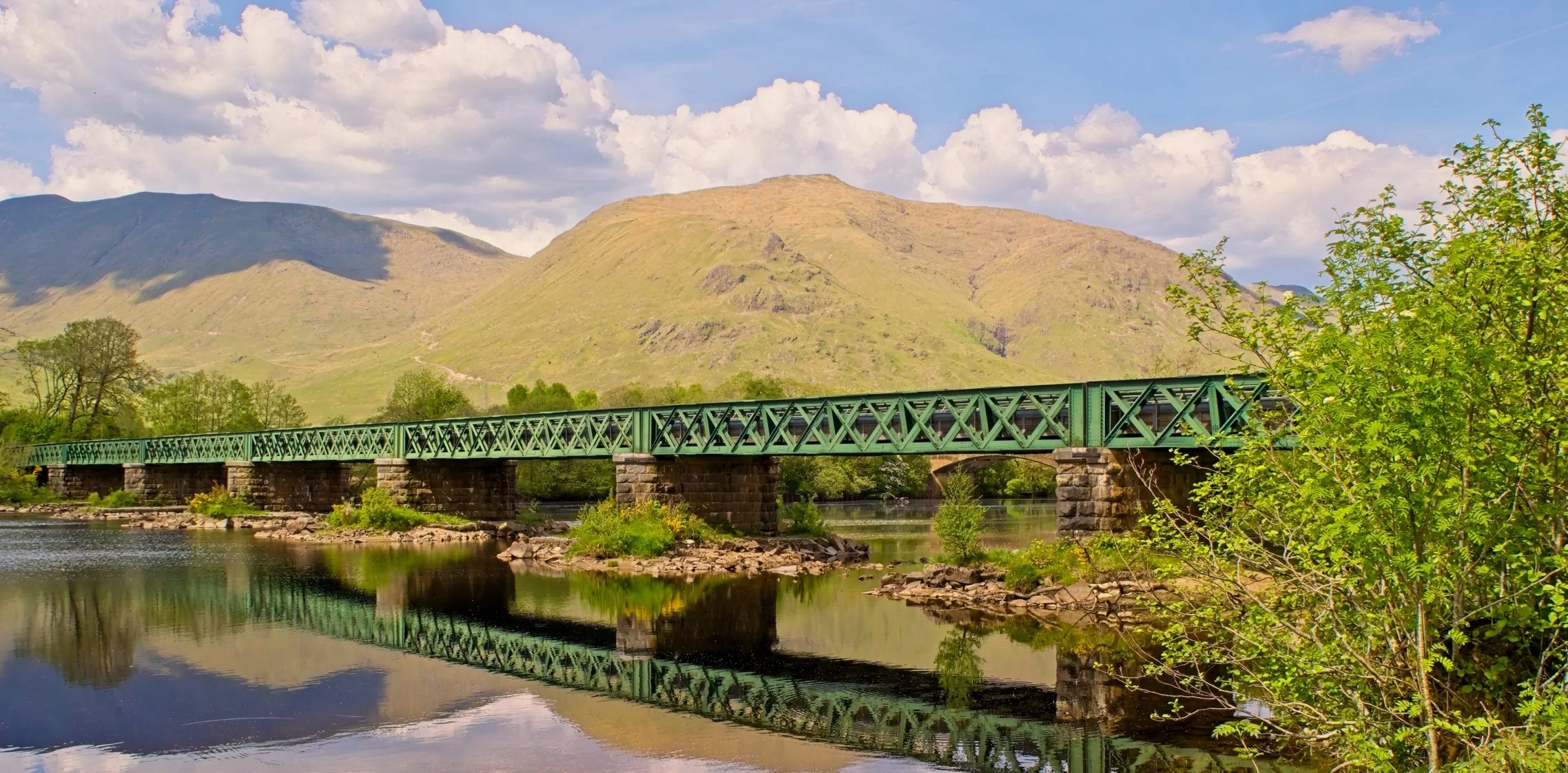
We had very little time to explore this place and it was a shame as it looked amazing. But only a few minutes until the gate was closing. This is Kilchurn Castle built mid 1500’s. We walked under the old and interesting single track railroad bridge to get access to the castle.
Ruins /
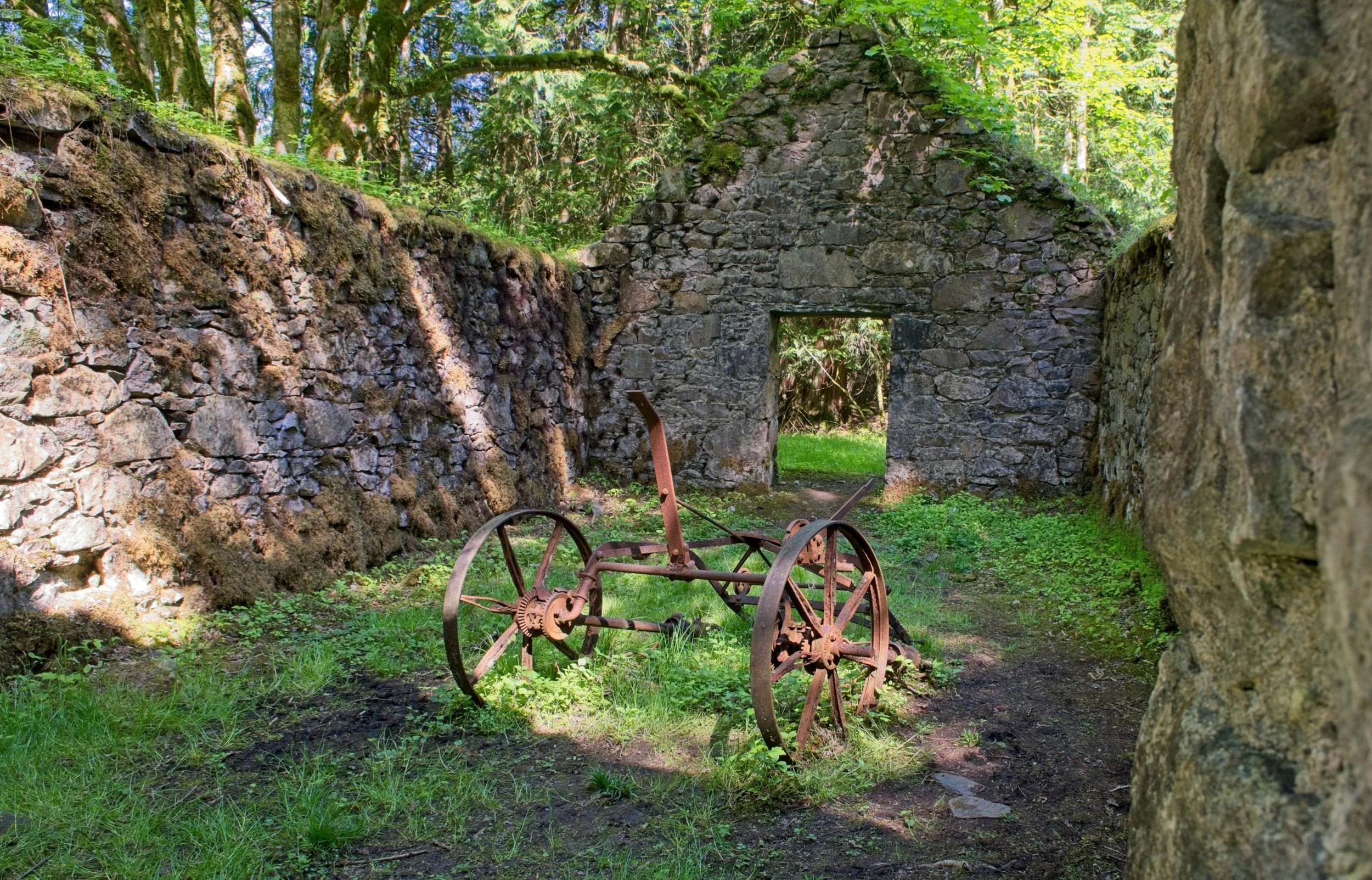
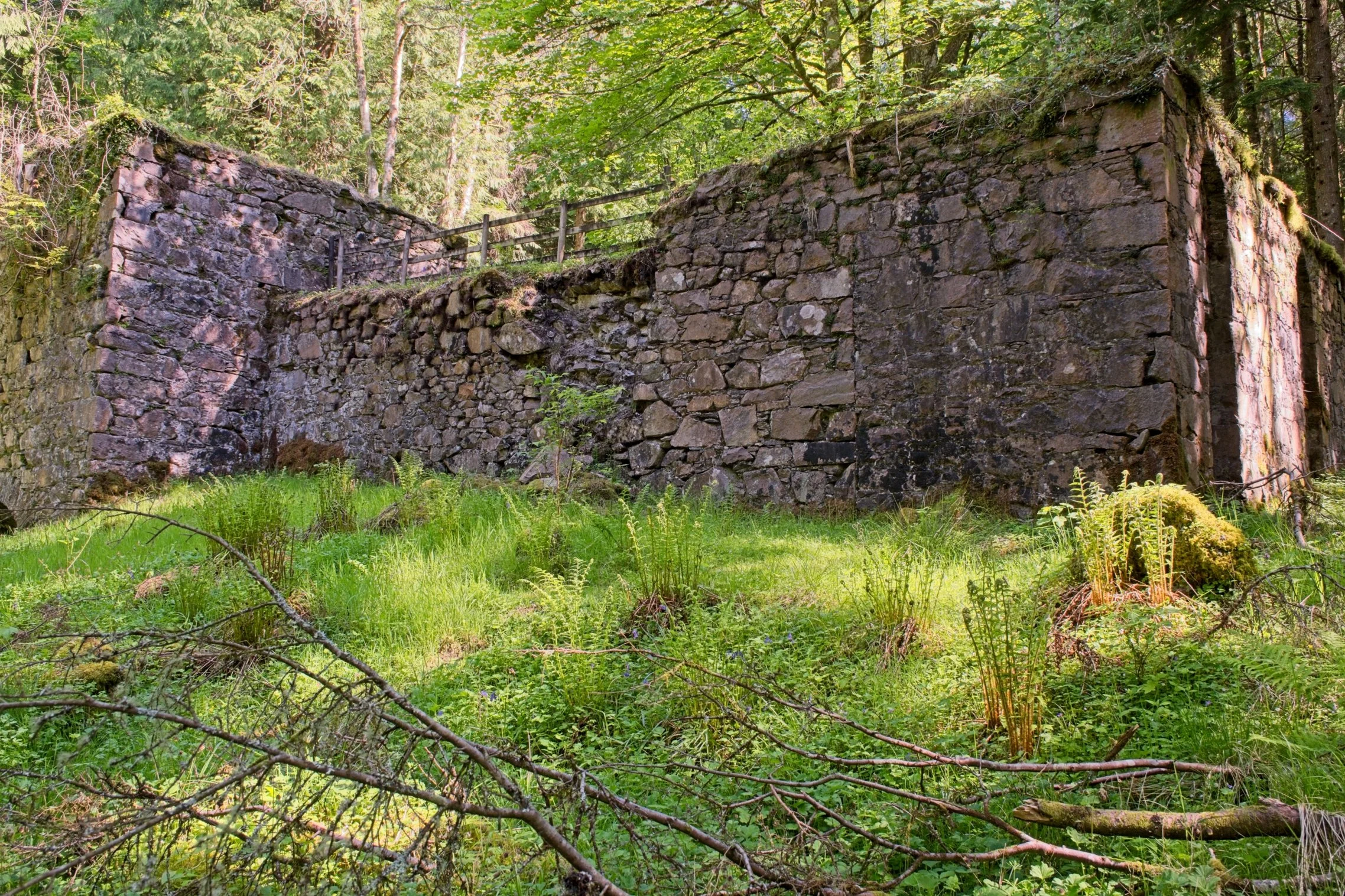
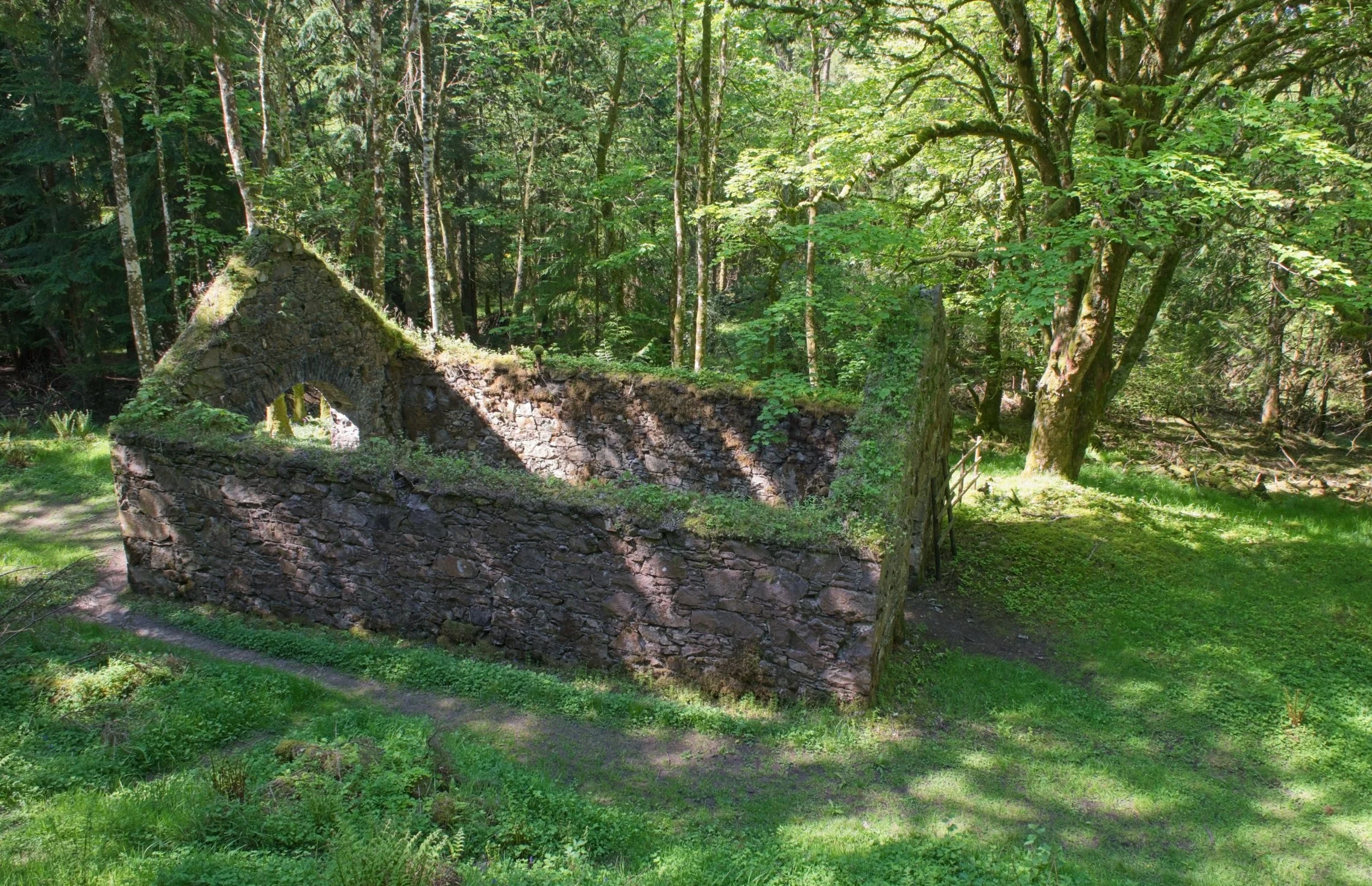
This is an old lime kiln on the property of the Inveraray Castle. It was on the hike to the mountain top where the old folly stands and the view is amazing.
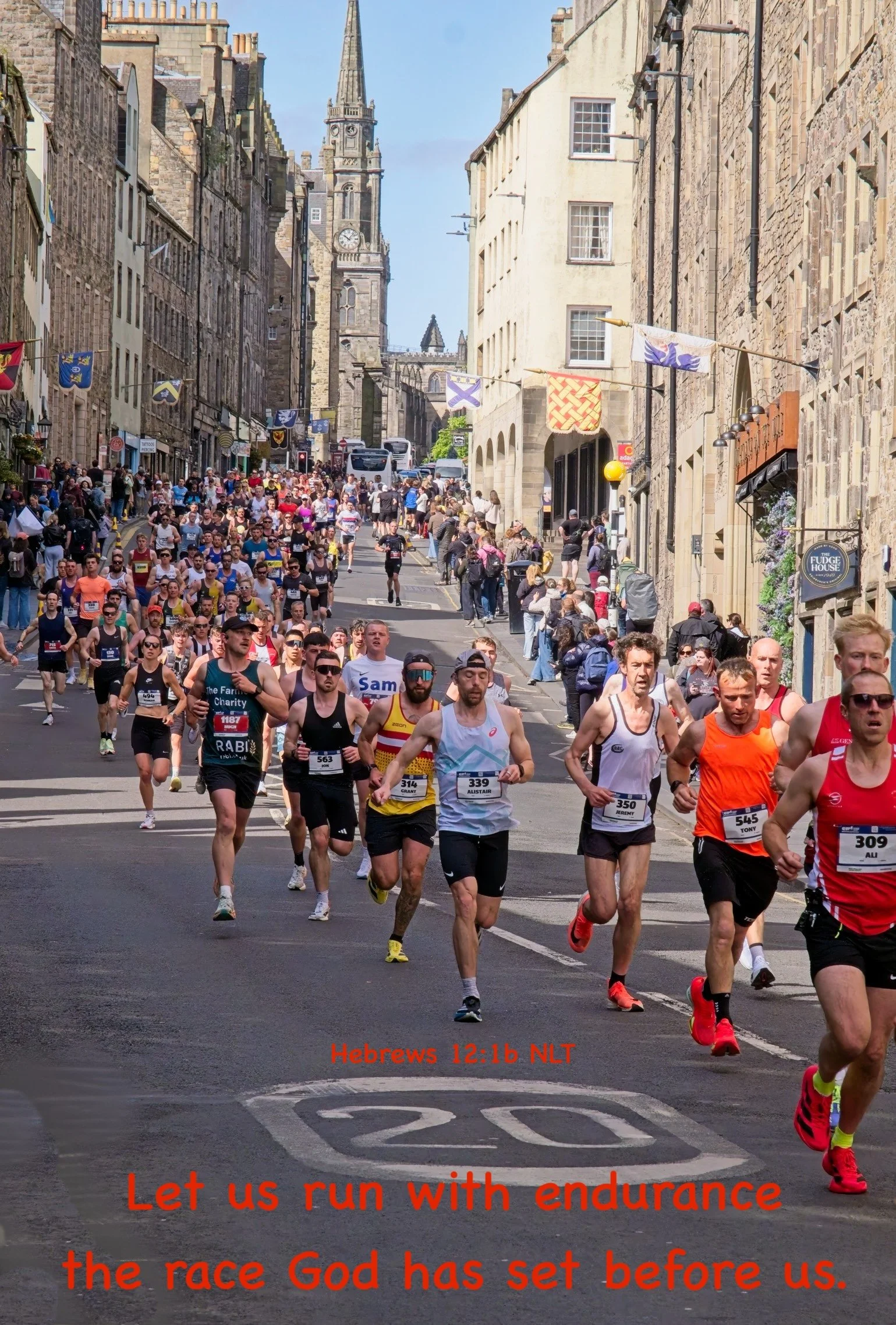
Sunday Scripture: Photo from the marathon in Edinburgh. /
Lovely! /
Miss Rowena will be back next Saturday to give the final report on the Scotland jaunt. And two weeks later, if her therapy is complete, she will provide her first selection from the US.
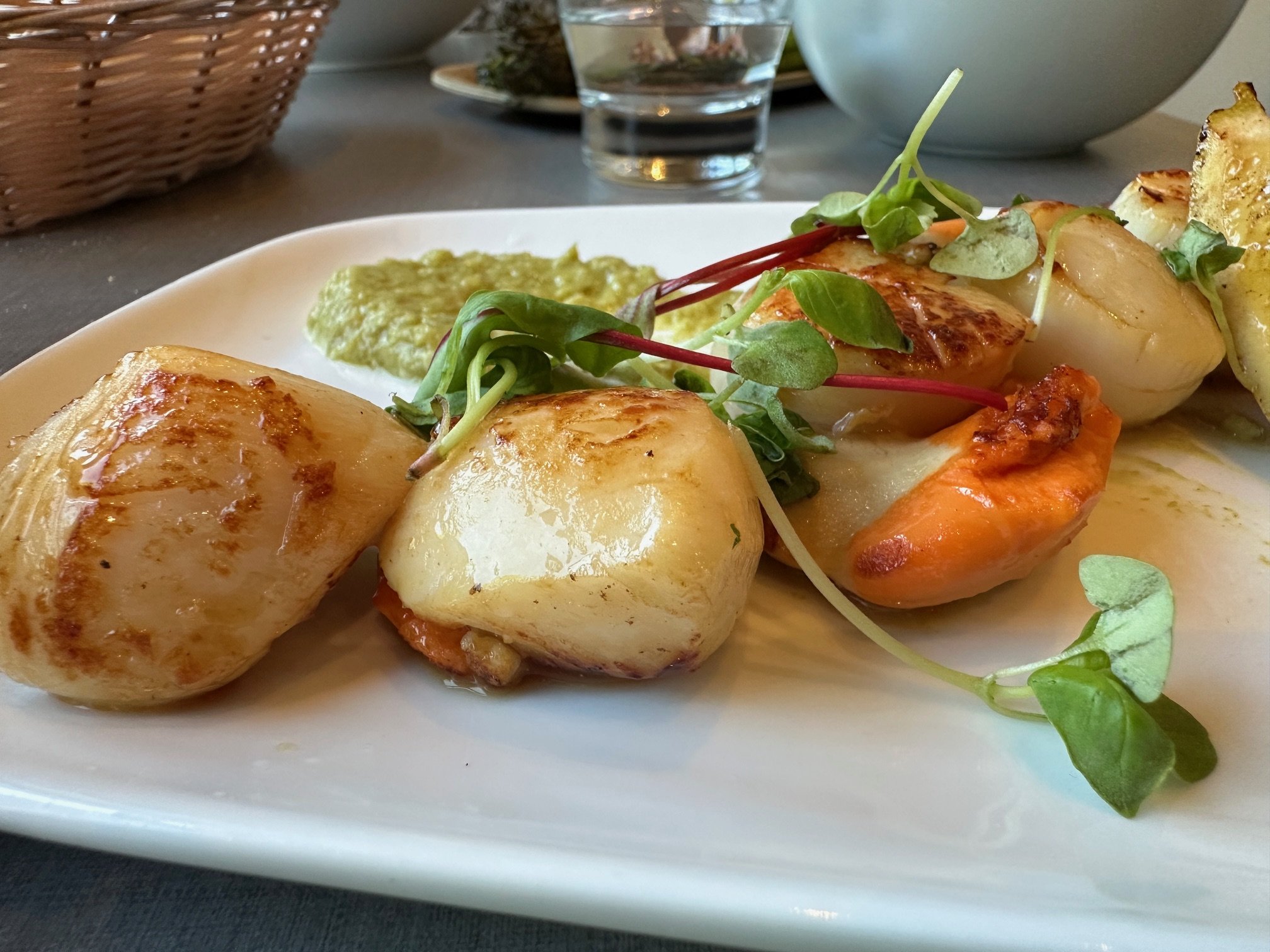
Meanwhile we learned that in Scotland seafood means shell fish. Thankfully we both like them for the restaurant we went to for a special meal was only shellfish. I had mussels and scallops, jill had a pasta with oysters.


"O! say does that star-spangled banner yet wave, O'er the land of the free and the home of the brave." /
Photo is our flag reflected in the pond from the Korean War Memorial in Washington, DC.
And, yes, it does because of many sacrifices over 249 years.

Flora Week - Scotland Edition .4 /
The carpets of bluebells were stunning.

Flora Week - Scotland Edition .3 /
A walk in the woods along the shore of Loch Ness. This was a wonderful, easy trail with lots of flowering shrubs and views of the loch. But what we liked best was a quiet side trail that led to the rocky shore with an old fallen log where we spent most of an hour just enjoying the sounds, the quiet, the breeze and each other. Plus, we were heading back to ice cream!
We also met and chatted briefly with a young couple hiking the path and he said that one year ago (on the day we met them) it snowed a bit. So we were grateful for 72 and blue skies and not 37 and snow.


Our barely visible side trail

Flora Week - Scotland Edition .2 /
Gorse, of course. It is the most amazing yellow and it grows in abundance in Scotland, especially in the west. It is also wicked. The thorns are long, strong and needle sharp. To learn more read this article: https://www.walkhighlands.co.uk/news/gorse-the-yellowest-of-flowers/


Flora Week - Scotland Edition /
These Water forget-me-nots grow in profusion over the rocks of the remains of the nunnery on the Isle of Iona. Constructed in the 1200’s the nunnery was begun after the establishment of the Benedictine monastery, founded by Raghnall mac Somhairle in 1203. Raghnall's sister, Bethóc, became the first prioress. This was one of the three Augustinian monasteries of women in Scotland. These ruins are the most complete of the three.

Sunday Scripture: Photo from St Magnus Cathedral in Kirkwall, Orkney, Scotland /

Rowena Brambleglen Pioneer /
I am well aware, dear readers, that this last installment of the Scottish journey is past due. I understand that you are disappointed that it is tardy, however, I am properly livid. The colorful appellation is not simply referring to my adorable bill. I am as cross as two sticks. Let me go back to the onset of this issue.
It all began with only two days left on my contract with the lad and lass and one more brilliant installment of reporting. When the lass came to me and suggested that she was rather pleased with my keen insight and delightful prose and wondered if I might like to come to the states with them for a bit. Well, I must say, I have been intrigued by the colonies for quite some time having seen nearly every episode of “Friends” and “Seinfeld” while I was recovering from my unfortunate storm-caused damage. My culinary expectations were and remain low but the idea of living for a while in New York and, perhaps, getting some Babaca bread or a famous bagel might be worth the effort. It is a paid trip after all. So I said, “yes” to the proposal. Then the horrors ensued.
First some official with a badge and name tag took me and placed me in quarantine. Me! I have never set a feather wrong, have no common diseases, brush my beak every night and have read Dickens. Yet this person whose language I imagine might have been English, rudely and unceremoniously dumped me in a pseudo jail with animals of every kind for five days. Plus they had the gall to serve me raw seeds. Unconscionable cruelty.
Second, after being released by my employers who had to pay fees for this stay, I am whisked off not to Broadway but to “Isle of Palms” in some place called South Carolina. There was an ocean but not the friendly, familiar rocks and craigs of a normal coast but hectors of sand followed by more sand. And the heat. Oh my. Now, much to my surprise we did have some interesting food that I will get to next week or so. I am just there long enough to wilt when we speed off for hours and hours in a car toward a place I know not, TenIsea. Poorly named as far as I know as I see no ocean at all. Again, barely in place long enough for my pillow to mold to my beak and back in yet another car and off to North Carolina. I presume it is north of SC but would not know as there, again, no ocean in a place named after Sir Walter Raleigh. We are there for some festivities and apparently the annual stuffing of boxes in a car and then, poof, hours and hours again to back to Tenisea.
Third we ate food along side the highway more than once at one of the thousands of “fast food” options that litter the highway. In my brief experience they are sort of fast but barely food and, again, eating in the car. I shudder to think what I may have agreed to with the American visit.
My head is spinning. So, I will prevail on your patience to wait for the next bi-monthly installment of my oasis of a column where I will complete the Scotland journal.

A proper meal in Scotland - one I fear I may never see again.
Castle Week .4 /
We did not visit this castle but passed in on the ferry from Oben to Craignure on the island of Mull. Th early light lit up the hill behind the castle. Duart Castle is about 700 years old and the home of Clan Maclean. It dominates the view to the Sound of Mull and Loch Linnhe. It is open for tours but we barely had time to get across the street to get the bus to the other side of Mull so we could catch yet another ferry to Iona. Whew.

Castle Week .3 /
As you can plainly see Edinburg Castle still presents a danger to the city below. Several more of this striking castle on a rock will soon be viewed on TLT.

Castle Week .2 /
This was the most impressive of the castles we were able to visit. This is Dunrobin near Dornoch, Scotland. This is one that is still a home but the home is in a section you don’t tour. We were in over 20 rooms. The gardens are extensive and the lawn leads down to the North Sea. A most magnificent home with a lot of history. Parts of the castle date back to the 1200’s. I will be doing several photos of three of the castles later on the site, including Dunrobin. You can learn much more here: https://en.wikipedia.org/wiki/Dunrobin_Castle

Jill on the side of the pond with the castle on the hill.
Castle Week /
We start our castle week overview with the picturesque Eilean Donan castle located on a small tidal island situated at the confluence of three sea lochs (Loch Duich, Loch Long and Loch Alsh) in the western Highlands of Scotland. This was the home of the of the Clan Mackenzie. The 12th century castle was mostly destroyed in 1719 because of Mackenzie’s involvement in the Jacobite rebellion. It was rebuilt in the early 1900’s and the footbridge added. It is a popular tourist and movie site.
Eilean Donan, which means simply "island of Donnán", is named after Donnán of Eigg, a Celtic saint who was martyred in 617. Donnán is said to have established a church on the island.